
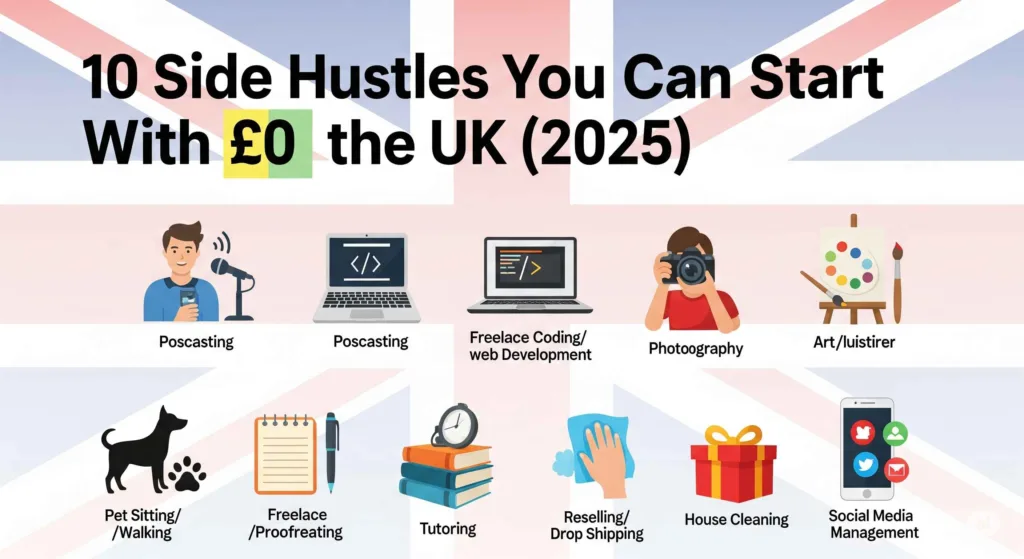
If you’re in the UK and looking for ways to earn extra income without spending a penny, you’re in the right place. These ten side hustles require zero startup costs and offer real earning potential. We’ll walk you through how to get started, and offer practical tax and time-on-task advice.
1. Freelance Services: Writing, Design & Admin Support
If you have a marketable skill—writing articles, designing graphics, managing spreadsheets—you can start freelancing today using free platforms.
In 2025, sites like Fiverr and Upwork remain go-to destinations to find freelance clients. According to the Financial Freedom Hubs list of the most profitable UK side hustles, offering freelance services can generate between £500 and £2,500 per month by committing just 5–20 hours weekly. You can also promote your services via social media platforms, LinkedIn, or by joining dedicated freelance communities like Reddit and Facebook Groups.
2. Tutoring & Coaching Online
Teaching a subject, language, or skill is one of the fastest ways to earn from zero-cost tools. Platforms like Superprof, MyTutor, or Preply allow you to onboard as a tutor with just a profile and clear schedule.
SideCalc estimates tutoring can bring in £400–£1,500/month with only 4–10 hours weekly. One Reddit teacher shared he earned around £2,000/month tutoring online, and others charge up to £80/hour in private setups.
A Reddit user in r/UKPersonalFinance reported tutoring privately at £70–£100/hour, with many earning hundreds to thousands monthly by sharing their subject expertise—often without any startup costs. This low-barrier entry model also applies to writing or graphic design gigs, which similarly offer zero investment with high returns, as highlighted in this guide to starting freelance design work.
3. Print‑on‑Demand & Digital Product Sales
Creating digital files—like planners, eBooks, or graphic templates—and selling them via Gumroad or Etsy costs nothing up front if you’re using free tools like Canva. According to this guide on digital product side hustles in the UK, these ventures can generate between
£200–£1,000 per month with consistency and niche targeting.
A Reddit user who focused on selling digital assets on Etsy shared that it changed everything: no inventory, no shipping—just profit. They used the proceeds to pay off debt and build savings. Similar stories include that of UK single mum
Shannon, who transitioned from Universal Credit reliance to earning over £52,000 a year by selling digital products through online platforms.
4. Mystery Shopping & Task-Based Income
If you enjoy exploring shops or testing services, mystery shopping can bring in small but reliable payouts—often £50–£100 per assignment.
The Sun also reports a reader earning £237 in a single week by testing products, takeaway deliveries, cashback apps, and freebies. These tasks are easy to sign up for and yield quick returns through platforms like
Market Force, Mystery Shopper, Silent Customer and My Offers.
5. Reselling & Flipping Items
Whether it’s clothes, books, tech gadgets, or furniture, reselling can earn significant income with no initial investment—if you start from items you already own or find free. Platforms like Vinted, Depop, eBay, or Facebook Marketplace make it easy to start selling immediately.
6. Virtual Assistant Work
Administrative support, social media management, or data entry gigs often begin with no cost. You can use Trello, Google Workspace, Canva, or free scheduling tools.
Platforms like Fiverr, Upwork and Kwork are suitable places to get suitable offers from clients in need of Virtual Assistants.
7. Transcription, Captioning & Voiceover Services
If you have good listening and typing skills or clear vocal delivery, transcription and voiceover roles are ideal. Sign up on platforms like Rev, TranscribeMe, or Fiverr without spending anything. Typical UK rates range between £30–£500 per project depending on length and quality.
8. Content Creation (Blogging, YouTube, Podcasting)
Creating content is a long-term hustle but starts cost-free: WordPress.com, Medium, or free podcast hosting lets you publish without investment. Monetization comes later via ads, affiliate links, sponsorships, or digital products.
SideCalc notes content creators earn £0–£2,000/month depending on niche and consistency. Forbes lists blogging and affiliate content as zero-cost hustles ideal for long-term growth.
9. Local Micro‑Services & Odd Jobs
Local gigs require no starting capital: dog-walking, pet-sitting, cleaning, gardening, or flat-pack assembly are all options. Platforms like Rover, TaskRabbit, or local Facebook groups serve customers across the UK.
Average income from pet or gardening services earns £10–£25/hour with no setup cost.
10. Rent Out Assets You Already Own
If you have spare space—like a room, driveway, or storage—you can rent it via Zoopla, Airbnb, JustPark, or Stashbee for passive income. Earnings range from £200–£3,500+/month depending on location and demand.
Smart Tips to Get Started Fast
- Choose one hustle aligned with your skills or interests
- Create free profiles or offer trial services to gather client feedback
- Promote in relevant UK groups, forums, or LinkedIn
- Track your time using apps or simple logs to ensure fair pricing
- Collect testimonials, build a portfolio, and gradually increase rates
Know Your Tax Responsibilities (UK)
In the UK, earnings above £1,000 from self-employment require registration with HMRC and an annual self-assessment tax return. You can deduct allowable expenses (e.g., tools, advertising, home office costs) and pay Class 2 and Class 4 National Insurance if income exceeds thresholds.
The Personal Allowance remains at £12,570 in 2025, and income above this is taxed at normal rates. VAT registration becomes necessary once turnover reaches £85,000 in 12 months.
FAQs
- How quickly can I earn with these hustles?
- Some hustles generate earnings in days (tutoring, freelancing); others grow over weeks or months (blogging, content creation).
- Do I need to register for tax right away?
- No—only once you pass £1,000 in self-employed earnings. Keep thorough records to stay compliant.
- Are these legitimate in the UK?
- Yes. All ideas listed are legal, transparent, and well-supported by UK platforms and tax guidance.
Final Thoughts
Starting a side hustle in the UK doesn’t always require capital—just intention, effort, and consistency. Whether it’s offering a skill, sharing your knowledge, or leveraging unused assets, there’s potential to build real income. Begin with small steps, track your progress, and let persistence guide your growth.