If you’ve ever wondered how Netflix streams without crashing, or how a scrappy startup can suddenly handle thousands of users overnight, the answer usually comes down to cloud server providers. But with so many names — AWS, Google Cloud, Azure, DigitalOcean, Hetzner — it can feel like walking into a tech bazaar where every vendor promises “the fastest” and “the cheapest.” This guide is here to cut through the noise and help you figure out which one is actually right for you.
So, what exactly is a cloud server provider?
Think of a cloud server provider as the landlord of the internet’s real estate. Instead of buying physical land (servers) and building your own data center, you rent virtual space from them. They handle the plumbing, electricity, and security while you just move in, set up your “furniture” (apps, websites, databases), and pay rent based on how much space and utilities you actually use.
The beauty is flexibility — spin up a server in minutes, scale from one user to one million, and shut things down without paying for unused space. That’s the magic that powers everything from Instagram to indie SaaS products.
Breaking it down: IaaS, PaaS, SaaS (the three cloud flavors)
Not all clouds are created equal. When people throw around acronyms like IaaS or PaaS, here’s what they actually mean — in plain English:
- IaaS (Infrastructure as a Service): You get the raw building blocks — virtual machines, storage, networking. You’re in charge of setting up the OS and apps. Great if you want control. Examples: AWS EC2, Azure Virtual Machines.
- PaaS (Platform as a Service): The provider handles more of the grunt work (runtime, scaling, patching). You just focus on code. Think of it as hiring a handyman so you don’t have to fix the leaky pipes yourself. Examples: Google App Engine, Heroku, Azure App Service.
- SaaS (Software as a Service): This is full-blown software delivered to you over the web — no servers or installs needed. Gmail, Zoom, Slack are classic examples.
Most developers bounce between IaaS and PaaS depending on whether they need fine-grained control or a faster path to shipping features.
Why choosing the right provider actually matters
Cloud isn’t one-size-fits-all. The provider you pick shapes your costs, performance, even your stress levels. Here’s what shifts between providers:
- Feature set: Some clouds are like Swiss Army knives (AWS has over 200+ services). Others are minimalist but clean (DigitalOcean keeps it simple).
- Global reach: Need your app blazing fast in Lagos, New York, and Berlin? Choose a provider with data centers near your users.
- Pricing models: Some clouds charge like complex phone bills (AWS/Azure). Others give you flat, transparent monthly plans (Hetzner, DigitalOcean).
- Compliance: If you’re handling healthcare data or payments, you’ll need providers certified for HIPAA, PCI-DSS, etc.
Choosing wrong can mean overpaying for bells and whistles you don’t use, or worse, being stuck with slow servers when your audience explodes.
How to choose without getting lost in jargon
Here’s a simple decision framework that I often use with founders and tech leads:
- Write down your real needs. Don’t just say “we need cloud.” Do you expect traffic spikes? Are your users global? Do you need AI/ML tools or just a reliable server?
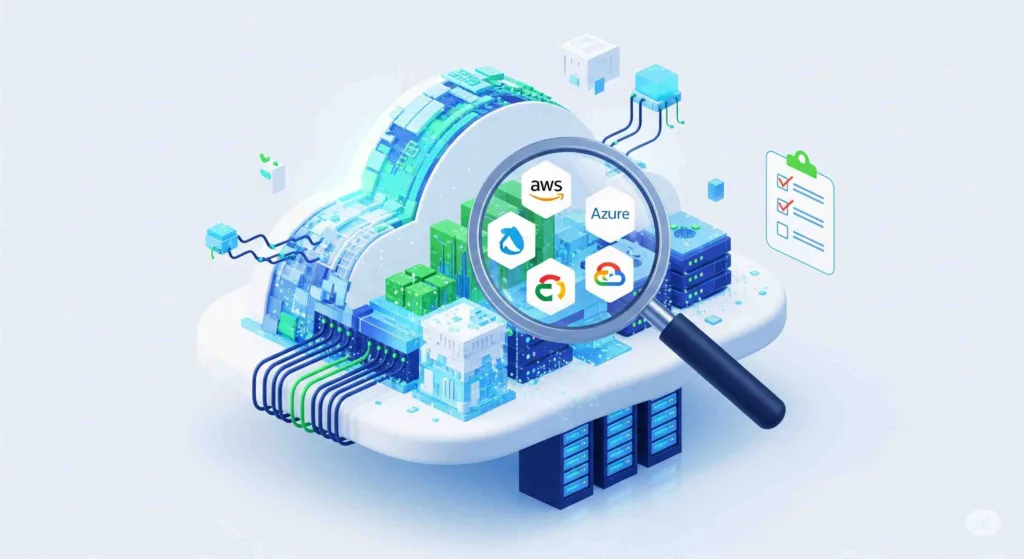
- Shortlist providers that fit your stage. Hyperscalers (AWS, GCP, Azure) are powerful but overwhelming. DigitalOcean, Linode, or Hetzner are gold for startups who want predictable costs.
- Test with a prototype. Deploy your app, measure load times, storage I/O, and see how painful (or easy) the console feels.
- Run the real cost model. Include compute, storage, bandwidth, backups, and support. Egress fees (sending data out of the cloud) can be the silent killer.
- Think exit plan. What if you want to switch providers in 2 years? Can you migrate your data easily, or are you locked in?
Pricing comparison (4 vCPU / 16 GB RAM server)
I checked the most recent pricing for a fairly standard server size: 4 virtual CPUs and 16 GB of RAM running Linux. Here’s how providers stack up:
| Provider | Plan | Hourly | Monthly | Notes |
|---|---|---|---|---|
| AWS | m5.xlarge | $0.192 | $140 | Huge ecosystem, but costs climb fast with add-ons. |
| Azure | D4s v3 | $0.192 | $140 | Often chosen by enterprises already using Microsoft tools. |
| Google Cloud | e2-standard-4 | $0.134 | $97 | Cheaper for baseline workloads, plus automatic discounts. |
| DigitalOcean | Droplet GP 16GB | $0.1875 | $126 | Transparent pricing; includes bandwidth. |
| Hetzner (EU) | CX41 | €0.039 | €25 | Incredibly cheap, but EU-centric. |
Notice the spread: AWS and Azure cost ~40% more than Hetzner for the same raw server. But remember, raw compute isn’t everything — support, compliance, and services matter too.
Hidden costs nobody tells you about
Here’s where a lot of startups get burned. Beyond the server hourly rate, you’ll run into:
- Data egress fees: Sending data out of the cloud is often pricier than the server itself.
- Snapshots & backups: Extra charges for redundancy and recovery.
- Managed services: Databases, load balancers, queues all add to the bill.
- Support plans: Want a human engineer to pick up the phone? That’s a premium line item.
The sticker price is just the start. Always model the full journey of your workload.
Who should pick what?
- Early-stage startup: Go with DigitalOcean or Hetzner — predictable pricing, easy setup.
- Enterprises: AWS or Azure — global reach, compliance certificates, and mature services.
- AI/ML workloads: Google Cloud and AWS shine with GPU options and managed ML platforms.
- Low-budget dev projects: Hetzner offers unbeatable raw pricing if EU latency is fine.
Final checklist before committing
Before hitting that “Create Server” button, run through this list:
- Are data centers close to your users?
- Do you know your real bandwidth costs?
- Does the provider have the compliance your industry requires?
- Is there an exit plan if you need to migrate later?
Wrapping up
Choosing a cloud provider is less about chasing the lowest sticker price and more about matching what you actually need. If you’re a lean team, simplicity may matter more than a giant feature catalog. If you’re a global fintech, compliance and uptime may outweigh cost. The right provider is the one that balances today’s reality with tomorrow’s growth.
Pro tip: Don’t just trust the marketing sites. Spin up a server, measure it, and see how it feels to manage. A few hours of testing can save you thousands down the line.